Lets dive into how to raise meat rabbits for profit, pulling from our experience and trials on our own homestead over the years!
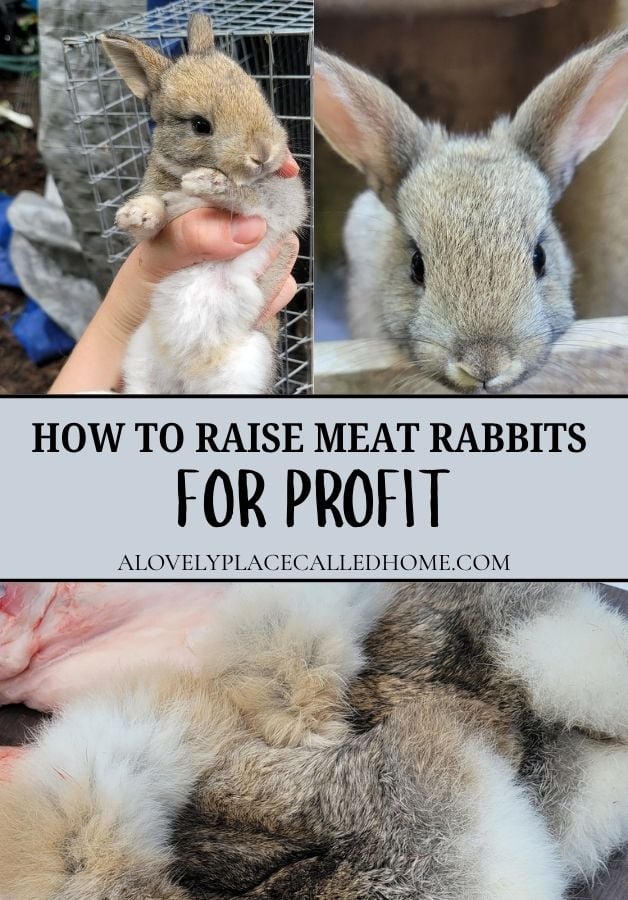
Raising meat rabbits is one of those homesteading systems that looks incredibly simple from the outside. And in many ways, it IS simple!
You start with a few rabbits, they reproduce quickly, they don’t require acres of pasture or a massive barn. They’re quiet, relatively easy keepers, and within a matter of months you can be putting home-raised meat into your freezer.
But after raising meat rabbits myself—and starting with a rabbitry that was much larger than any beginner probably needs—I have learned that there is a lot more to consider, and prepare for, in order to make a profit and feed your family at the same time.
Meat rabbits require: housing, feeding, breeding, cleaning, growing, processing, and winter management. And then there are all of the possibilities rabbits can bring to a homestead besides meat, including: pelts, breeding stock, manure, live animals, and even an additional source of farm income through education.
So if you’re considering raising meat rabbits on your homestead, I want to walk you through what the system looks like, what I’ve learned from doing it myself, and what I would consider before getting started.
This article is also a podcast which streams on all platforms including; Spotify, Apple, Amazon, and YouTube! Or click and listen below:

Raising Meat Rabbits for Profit: Costs, Income Streams & Reality Ep.6 – A Lovely Place Called Home
So You Want To Know How To Raise Meat Rabbits For Profit?
There is a reason meat rabbits are so popular among homesteaders. They don’t require much land, they’re quiet, their reproduction cycle is fast, and you can start relatively small. Compared with many other livestock systems, your initial investment can be fairly manageable as well.
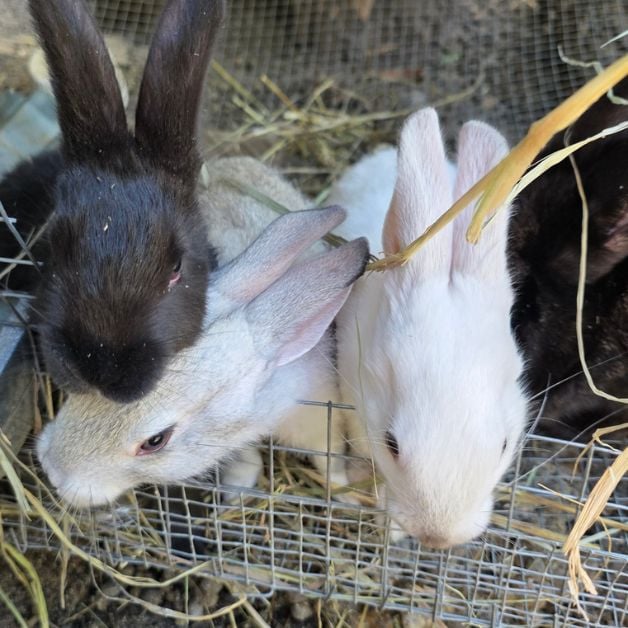
They’re also an incredibly versatile homestead animal, which I quickly stated above.
Rabbit meat is incredibly lean, which is another plus for the consumers of this product.
Obviously, the primary product is meat. But depending on how you build your rabbitry, you may also be able to produce breeding stock, sell young rabbits, save pelts for projects and use the manure throughout your gardens.
Once I started raising rabbits, I realized there was an entire little system surrounding them. And it created a fun and productive income stream for our farm!
But before we get into all of that, I need to tell you how I got started.
Because I absolutely do not recommend copying this part.
How I Somehow Started With About 46 Rabbits
If you know me, you know I tend to go into things at about 110%.
I also have a habit of scaling things much larger than necessary and figuring out how to turn just about everything into a business.
Meat rabbits were no exception!
When I first started researching rabbits, my original plan was actually very reasonable. We have four children, so I told my husband, Curtis, that I thought it would be nice for each child to have their own doe and then we would keep one buck.
Five rabbits that’s perfectly sensible.
Then I found someone selling off their rabbitry….. I think you can guess what happened next.
They had multiple unrelated lines, young rabbits, proven rabbits, does with kits and even pregnant does. Instead of choosing the five rabbits we had talked about, my brain immediately went:
Why wouldn’t I just buy the entire rabbitry?
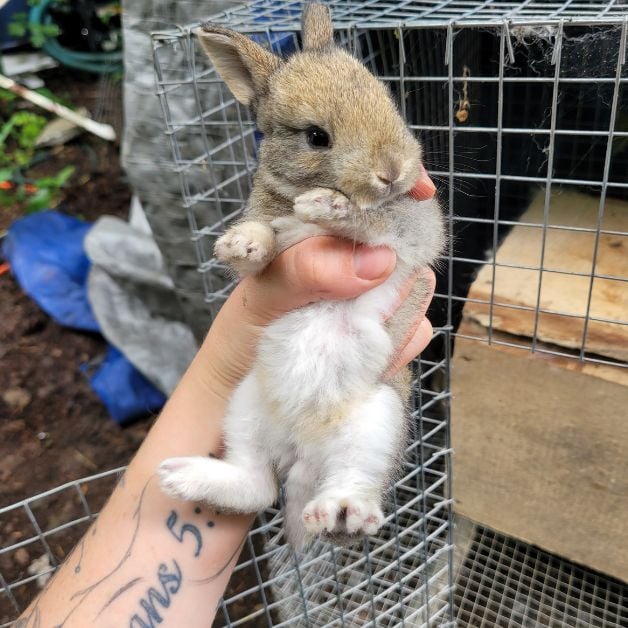
Which is how five rabbits turned into somewhere around 46.
I rounded up cages and boxes, picked up the rabbits and then eventually had to sit Curtis down and explain what I had done.
His reaction still lives in my head, and we both laugh about it to this day. He was stunned to say the least.
Was starting with approximately 46 rabbits excessive?
YES.
But I learned an incredible amount very quickly. Over time I sold many of those rabbits as pairs, trios, proven does and proven bucks. Because I knew their lineage, I could pair unrelated animals together for people starting their own rabbitries.
Eventually, I made back the money I had invested into both the rabbits and the custom made cages I had built myself. (Over 10 extra large breeding cages)
We have since downsized considerably. So while I wouldn’t tell a beginner to start with 46 rabbits, that experience taught me a lot about what actually makes a meat rabbit system manageable.
Meat Rabbit Housing: Cages vs. Colony Raising
There are two primary ways I have considered housing rabbits: individual cages and colony-style housing.
I started out with suspended individual cages.
The basic idea sounds wonderful. The cage has a wire bottom that allows manure to fall through. The rabbits remain off the ground, and you can collect the manure underneath.
In practice, I found it created more work than I expected.
Rabbit manure went through the mesh quite easily, but rabbit hair did not.
Keeping everything properly cleaned in summer and providing enough bedding and protection during winter became a larger job than I originally anticipated.
If you choose cages, building your own can also save a substantial amount of money compared with buying premade cages. I built cages using wire mesh, and once you’ve learned how to assemble them properly, it can be a very practical DIY option.
Individual cages do have one major advantage: control.
You know exactly which rabbit is bred to which buck. You can plan breeding dates. You can track litters. You can separate animals easily. It also minimizes rabbitry wide disease and sickness because they are all isolated.
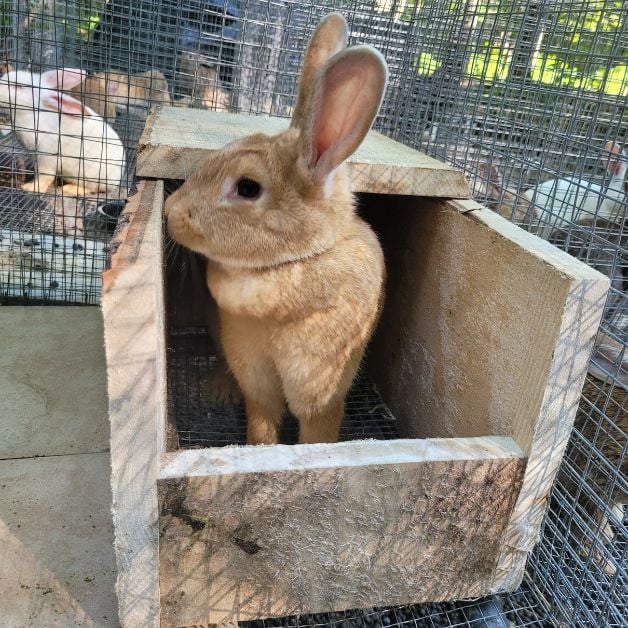
For someone who wants a highly organized breeding program, that can be incredibly useful.
Colony Raising Meat Rabbits
Colony housing is essentially the opposite approach.
Rather than every rabbit having its own individual cage, the rabbits live together in a larger shared space. Some people keep their buck permanently within the colony, while others separate him so they have more control over when breeding happens.
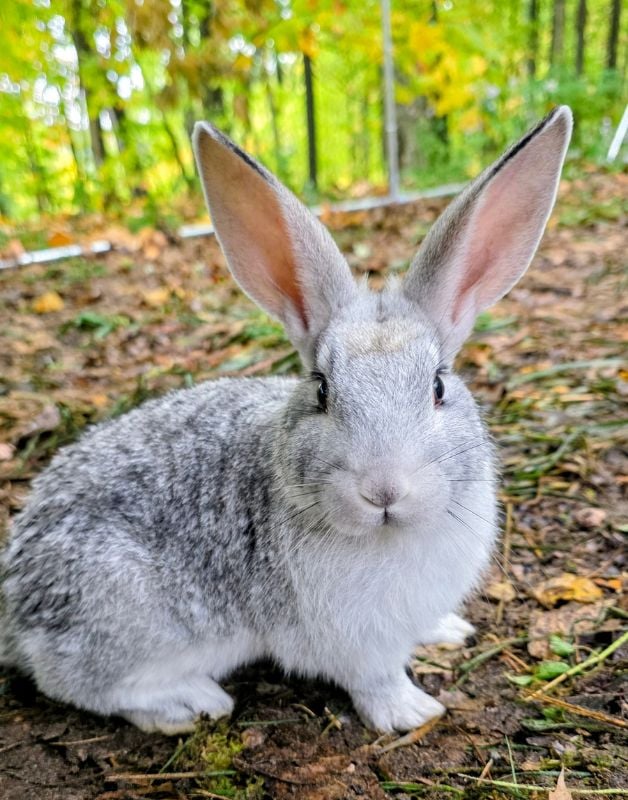
I personally lean much more toward the colony method now.
There are still things you have to manage. Rabbits can be territorial and females can have disagreements. Bucks can become aggressive, and you have to think carefully about how many males you keep together.
But I like giving the rabbits more space and allowing more of their natural behaviour.
The tradeoff is that you give up some control.
With cages, you may have a notebook telling you exactly when every doe was bred. With a colony, sometimes your first announcement is a collection of tiny bunny heads suddenly appearing from a nest.
For the way I like to farm now, I’m much more comfortable with that.
What Do You Feed Meat Rabbits?
Feeding meat rabbits can be incredibly simple, but this is also an area where I learned some lessons the hard way.
My preference is to provide rabbit pellets even when the rabbits also have access to grass or hay.
There are people who raise rabbits without pellets, particularly when they have abundant forage available. Personally, pellets make the system easier for me. I know the rabbits are consistently getting feed, and it removes some of the guesswork.
Rabbits also eat hay and can be raised or finished on grass.
Grass is where meat rabbits can become particularly economical during the growing season. If rabbits are accustomed to it, you can use rabbit tractors or another pasture-based system and turn something growing naturally on your property into meat, manure and potentially pelts.
But there is one important lesson I would emphasize:
Do not suddenly change a rabbit’s diet.
Rabbits have sensitive digestive systems. (I would argue they are one of the most sensitive farm animals when it comes to dietary needs)
Giving a rabbit a little fresh grass occasionally and then suddenly placing that rabbit on unlimited grass is not the same thing as gradually transitioning it onto pasture.
Unfortunately I have made mistakes with this myself.
Whenever I’m introducing something new, I want to do it gradually. That applies to adult rabbits and young rabbits. Once they’re properly accustomed to grass, however, it can become a fantastic part of a low-cost meat rabbit system.
And don’t underestimate how much those little rabbits can eat! Growing kits can put away a surprising amount of food, while does are constantly cycling through pregnancy, lactation and recovery.
Breeding Meat Rabbits
If you’re raising rabbits specifically for meat, breeding is obviously the engine behind the entire system.
A simple beginner rabbitry could consist of two does and one buck.
The buck can service multiple females, so you don’t need equal numbers of bucks and does. And a good rule of thumb for breeding bucks is to wait 24 hours between each doe breeding.
With individual cages, breeding can be very controlled. With colony housing, you can either keep the buck separate and introduce him during your chosen breeding period or allow a less controlled breeding system.
Your exact schedule will depend on how intensively you want to produce.
Some people breed a doe again fairly soon after she gives birth. I personally prefer to wait until her kits are weaned at around six weeks before breeding her again.
I would rather maintain a system I am comfortable with and keep my breeding stock in good condition than push for the maximum number of litters possible.
You can also build breaks into your schedule. There is no rule saying you have to produce rabbits continuously throughout the year.
How Long Does It Take to Raise Meat Rabbits?
This is where rabbits become really interesting from a homestead-production perspective.
Let’s use a simple example.
Say you have:
- 2 does
- 1 buck
- approximately 8 surviving kits per litter
If both does produce eight kits, you now have 16 grow-out rabbits.
Pregnancy is approximately a month, although the exact gestation varies. The kits then remain with their mother until weaning, which is around six weeks.
After weaning, those rabbits move into the grow-out stage. That usually means they move into a separate cage than their mother (who lives in her breeding cage, or if you do colony, away from their mature colony mates.)
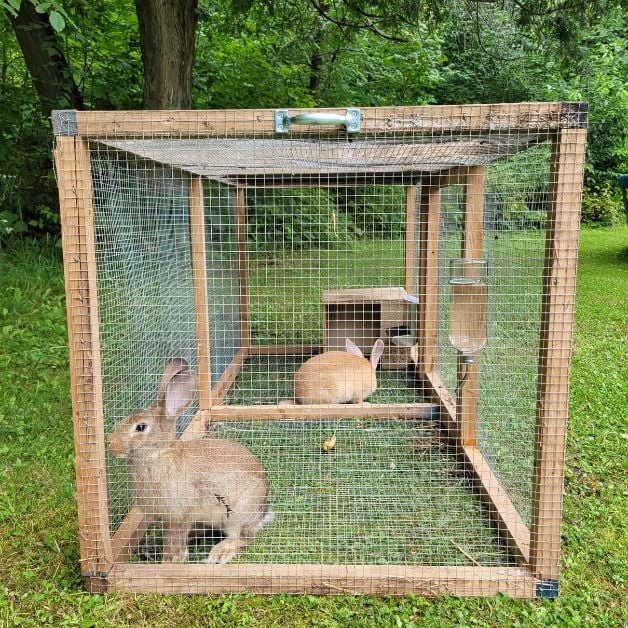
I typically think in terms of harvesting around 15–18 weeks of age, depending on the rabbit and how it has grown.
From that initial breeding until you’re actually putting those rabbits into the freezer, you’re looking at roughly five months.
But here’s the important part:
Once you establish a breeding cycle, you aren’t waiting five months between every batch.
While one litter is growing out, the does can begin another breeding cycle.
That’s when a rabbitry starts functioning like a system rather than a single batch of animals.
You might have one group being weaned, another growing out and does entering another breeding cycle. That can create a surprisingly steady amount of food (or sales) from only a few breeding animals.
How Much Rabbit Meat Does a Family Need?
I don’t personally find pounds to be the most useful way to think about rabbit meat because you’re dealing with a whole animal with bone.
Instead, I think in meals and number of rabbits.
For our family, if we’re having rabbit with something like rice and salad, I would generally take two whole rabbits from the freezer.
A rough way I think about it is:
Two rabbits = approximately one commercial-sized chicken for our family.
So in our two-doe example, 16 rabbits would give us approximately eight family meals.
That makes it much easier for me to calculate what I actually want my rabbitry to produce.
Rather than asking, “How many pounds of rabbit can I produce?” I would ask:
How many rabbit dinners does my family actually want to eat?
Because there is no point creating an enormous breeding program if your family only wants rabbit twice a month, or if your customer base only wants to eat rabbit meat every few weeks throughout the year.
Build your production around real life and real consumer needs! For us, we eat rabbit roughly once every two weeks, so 16 rabbits in the freezer will last us about four months. Also we find our customer base fluctuates majorly throughout the year. This is just another reason we have multiple income avenues with our rabbity.
Processing Is Part of Raising Meat Rabbits
This is the part people sometimes avoid thinking about when they’re excitedly researching adorable baby rabbits.
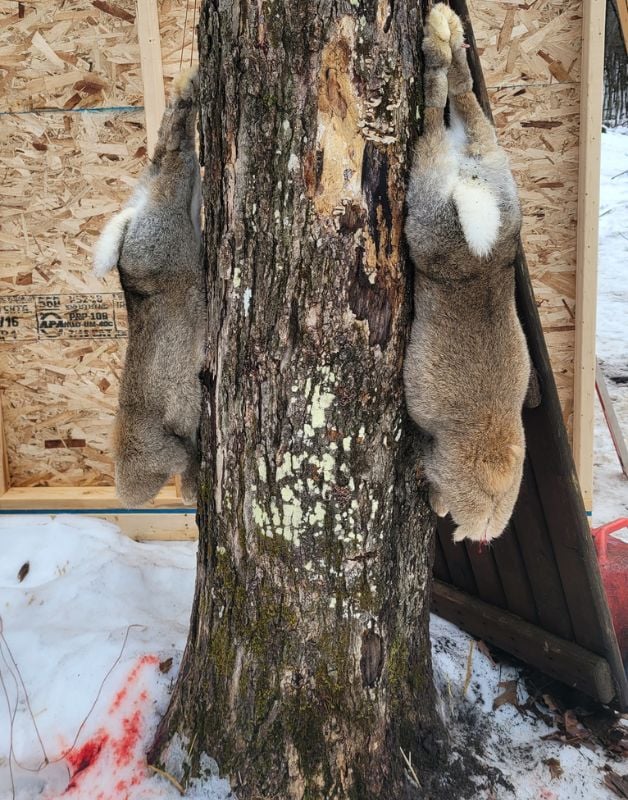
If you’re raising rabbits for meat, eventually those rabbits need to be processed.
Before starting, decide what that will look like.
Will you process them yourself? Will a friend or family member help? Will you use a butcher?
When my rabbitry was larger and I had breeding cycles constantly producing grow-outs, there were periods when it felt like I was processing rabbits all the time.
I didn’t enjoy having rabbit-processing day every single week.
It takes time. It uses freezer space. And even if you’re comfortable processing animals, doing it constantly can become mentally tiring.
So eventually, I adjusted my system.
That’s another reason I recommend thinking about your entire rabbit calendar rather than simply asking how many babies your does can produce.
Maximum production doesn’t automatically equal the best system for your homestead, or your heart.
(Please do your research on the laws for your province or state regarding the sale of meat. You may need a licenced butcher to dispatch and process your rabbits in order to lawfully sell them)
Should You Raise Rabbits Year-Round?
You can also decide whether you want rabbits producing year-round.
I personally don’t like having baby rabbits throughout the winter. Instead, I prefer to hunker down through the coldest part of the year and begin breeding again toward early spring.
Someone else may want continuous production. Another person living somewhere extremely hot may choose to take a break during the hottest part of summer instead.
There doesn’t have to be one universal rabbit calendar.
Look at your climate, your housing, your available feed, your customers needs and your own workload.
Then build your breeding schedule around that.
Rabbits Can Produce More Than Meat
One of my favourite things about raising rabbits is that the system can produce so much more than dinner.
Depending on your goals, rabbits can provide:
- Meat for your family
- Breeding stock to sell
- Weaned grow-out rabbits
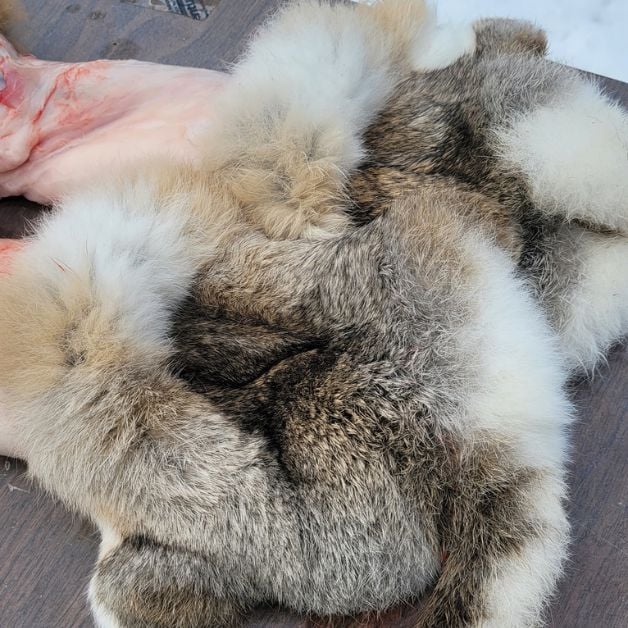
- Pelts
- Pet rabbits
- Manure for the garden
I’ve sold six-week-old weaned rabbits to people who wanted to raise out their own meat rabbits without maintaining breeding stock themselves.
I’ve also sold breeding pairs and trios, proven does and bucks.
When you’re selling breeding stock, quality matters. I want healthy animals, good lineage and rabbits that someone is excited to bring home and build their own rabbitry around.
I have also kept rabbits with pelt colour in mind. That adds an entirely different dimension to breeding because now you’re not only considering meat production—you may also be considering coat colours and what you eventually want to make from those pelts.
Suddenly one livestock system is producing food, fertilizer, craft materials and potential farm income.
That is exactly the kind of system I love on a homestead!
Don’t Waste the Rabbit Manure
And finally, let’s talk about one of the least glamorous but most useful things rabbits produce:
Manure.
Rabbit manure is incredibly useful around the homestead.
I use it in my market gardens, around perennial plants and anywhere else I can put that fertility back into the property.
When you’re designing your rabbit housing, think about manure collection from the beginning.
Don’t treat it like waste you need to get rid of. Instead, treat it like another product coming out of the rabbitry. Especially if you are already growing a vegetable garden, the rabbits are helping create fertility while also producing meat.
That’s a pretty useful little animal.
Are Meat Rabbits Worth Raising?
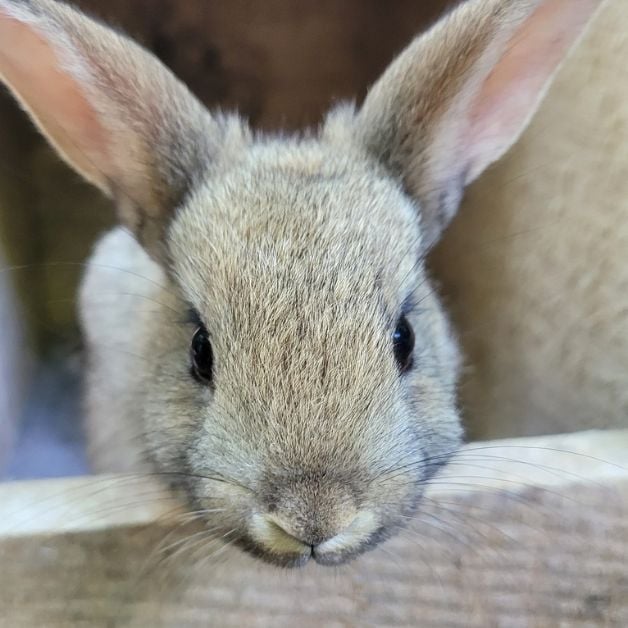
For our homestead, rabbits have been an incredibly useful livestock system.
They reproduce quickly. They don’t require the infrastructure and costly fencing of a cow or pig. They can utilize low quality grass and hay. They provide meat, manure, pelts and potential income. And once you understand the breeding cycle, you can create a predictable rhythm of production throughout the year.
But I wouldn’t tell someone to get rabbits simply because the numbers look good.
Think about the entire system of raising rabbits for meat and profit.
- Where will they live?
- What will you feed them?
- Will you keep them through winter?
- How many litters do you actually want?
- Where will the grow-outs go?
- Who will process them?
- How much rabbit does your family actually want to eat?
- Do you want to sell breeding stock or young rabbits?
- Is there a customer base for meat rabbits?
And perhaps most importantly: How much rabbitry do you realistically want to manage?
You definitely don’t need to begin with 46 rabbits.
Trust me.
Two does and a buck can teach you plenty.
Start with a system you can manage, learn your rabbits, figure out what works on your property and then scale from there. Because the goal isn’t to produce the maximum number of rabbits possible, even if you want to optimize profit.
The goal is to build a rabbitry that fits into the larger rhythm of your homestead—one that turns the resources you already have into food, fertility and another little piece of independence and income for your family.
How To Raise Meat Rabbits For Profit
HOW TO RAISE MEAT RABBITS FOR PROFIT

Leave a Reply