If you don’t want certain ingredients in your pigs feed (such as soy or corn), or you want total control your herds intake, you can make your own feed fix.
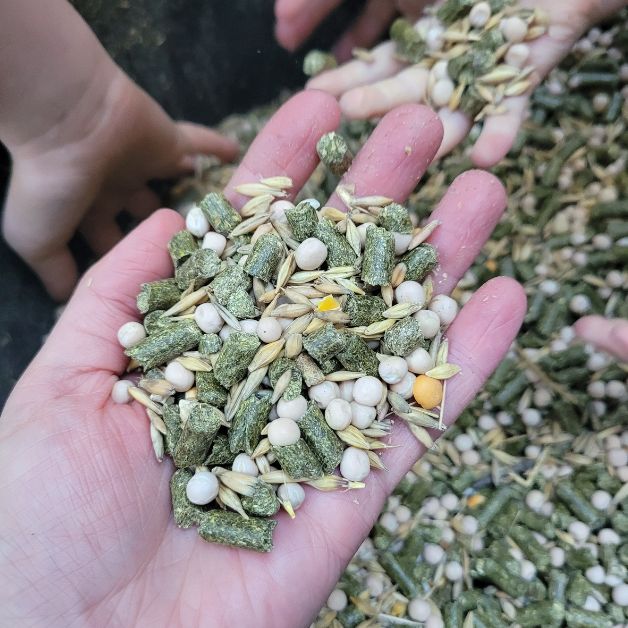
When I first set out to make my own pig feed I found it very challenging to find anything online about feeding pigs without using soy or corn. So I had to thoroughly research each ingredients substitute. Their substitutes had different percentages needed to obtain the same result, so I also had to do the math on how much more I’d need to feed my pigs properly.
Also, I found out very quickly how limited the local feed stores were when it came to alternative feeds such as bran, seeds and field peas that were meant for animal consumption. Make sure as you are doing your research and working with your local feed store, that you choose ingredients that are available, not super expensive, and that aren’t sprayed.
What a pigs diet should consist of:
The type of feed will vary depending on the stage of production, but typically includes a mix of grains, protein sources, vitamins and minerals. Feeding pigs table scraps and garden scraps is also a wonderful way to supplement their feeding, but you shouldn’t rely on food scraps alone to grow out a pig for consumption.
In general, piglets should consume a diet that is 20-22% protein, while older pigs only need a diet that is 14-16% protein.
Along with protein, pigs also need carbohydrates for energy. Carbohydrates should make up 50-60% of a pig’s diet.
Pigs also need minerals so that they develop properly.
Commercially and on the smale scale, soybean and corn are the main ingredients in pig feed. They provide energy and protein to the animals. But there are many other alternatives you can choose instead of these ingredients.
Reminder:
Always make sure to check your tags when you get your feed. Sometimes, by no fault of a single person, your order will be wrong. This past summer I picked up my bags of field peas and checked the tags just to make sure it was correct. To my surprise the bags were peas that were NOT intended for animal consumption. They were sprayed and were for planting (still confused about that one LOL), there was a warning label and everything for them. I would’ve easily missed it if I hadn’t been so careful.
Main ingredient:
As mentioned above, corn is the main ingredient in conventional pig feed.
Balancing corn with other feed sources is crucial to achieve an optimal diet for pigs. Here are some considerations when determining the best ratio for your herd:
- Energy Requirements: Corn is an excellent energy source, so the amount of corn in the diet should align with the pig’s energy needs. Factors such as growth stage, activity level, and desired weight gain influence energy requirements.
- Protein Content: While corn provides energy, it may not meet the protein requirements of pigs alone. Incorporating other protein-rich feed sources like soybean meal, peas, or triticale can help balance the diet and fulfill the pig’s protein needs.
- Fiber Content: Including fibrous feed sources like barley or oats can help provide adequate dietary fiber, which is essential for gut health and proper digestion. Fiber also helps regulate the pig’s appetite and prevents digestive disorders.
- Essential Nutrients: Consider the inclusion of other feed ingredients rich in vitamins, minerals, and amino acids. This helps ensure that pigs receive a complete and balanced diet, promoting overall health and growth.
- Cost Considerations: The availability and cost of feed ingredients play a significant role in determining the optimal ratio. It’s important to strike a balance between cost efficiency and meeting the nutritional needs of the pigs
The ratio of corn to other feed ingredients depends on various factors such as pig age, weight, desired growth rate, nutritional requirements, and cost considerations. Finding the right balance ensures that pigs receive a well-rounded and nutritionally complete diet.
Alternatives for corn and soy:
While corn is widely used in pig diets, trying other alternatives can provide additional nutritional benefits for pigs. Incorporating different feed sources can help optimize pig nutrition and be tailored to pigs raised for specific purposes such as breeding sows or boars.
Here are several alternative options to consider that would replace corn in a pigs diet:
- Barley: Barley is a cereal grain that can serve as a substitute for corn in pig diets. It contains a comparable energy content and provides a good source of dietary fiber.
- Wheat: Wheat is another viable alternative to corn. It offers similar energy levels and is rich in protein, vitamins, and minerals.
- Oats: Oats are a nutritious grain option that can be used as part of a pig’s diet. They are high in fiber, which can contribute to improved gut health.
- Triticale: Triticale is a hybrid grain derived from wheat and rye. It combines the advantages of both grains, offering good energy content, protein, and fiber.
- Peas: Peas are a legume that can be included in pig diets as a source of protein and energy. They are also rich in dietary fiber and can help diversify the amino acid profile of the feed.
Each of the grains listed above should be processed properly to ensure they can be digested by pigs. Typically that’s what your feed store will sell you anyway, but always check to make sure. Ask for rolled or crushed oats and barley for instance.
Soaking or fermenting feed:
Soaking your pigs feed is a wonderful way to make the most out of the feed and add nutrients. Just remember; soaking whole grains is different than soaking pelleted feed. Both can be done, but pelleted feed has a much shorter soak time and reacts differently than whole grains.
By soaking the feed in water, you also make it more than double in size, which your pigs will appreciate if they aren’t on a 24/7 feed program. They will be able to eat for longer, take breaks, and come back for more.
Whether soaking for a short time, or long enough for it to ferment, the process is the same:
- Fill your buckets or barrels half full of your dry mixed feed
- Add water until it reaches the top of the bucket
- Let it sit uncovered until its ready. 12-48 hours for “soaked” grains, 2-7 days for “fermented” grains. Fermenting depends on the temperature in which you grains are soaking. The warmer it is, the less time they’ll need to finish.
- Feed the entire mixture to your pigs! The liquid is just as important as the grains at this point.
Soaking benefits:
Soaking feed in water for 12 to 48 hours (uncovered) converts sugars, and some starches to protein. It creates a mild carbonic acid solution that breaks down husks and hulls of grain so pigs can digest them even easier!
Fermenting benefits:
The yeast and bacteria cultured during fermentation are able to break down complex, long-chain molecules that form undigestible fibers and proteins, like the hard outer shell of grains, corn and pea husks, and hay. Fermenting also adds natural vitamins but can reduce synthetic vitamins in a feed.
How it works: First, the feed soaks up the water, then natural yeast forms, making it smell slightly sweet, like a proofing bread dough. Next, the feed starts smelling a bit sour. Feed it to your pigs at this stage! Soon after the sour smell starts it will begin to go rancid. Make sure you rinse out your buckets or barrel before starting a new batch so that it doesn’t contaminate the new mix.
Supplementing with other food products:
You can supplement your pigs diet with things other than pelleted feed or grains bought from the feed store. We will look at some of the main ones below.
Milk
It’s very easy to raise up big healthy pigs on milk! Raw milk specifically, provides a tremendous amount of vitamins, minerals, fats, proteins etc etc. It’s a complete food for pigs!
If you have a dairy cow, or multiple dairy cows in milk, your pigs would love if you shared! We raised up a whole batch of pigs on our jersey cows milk. She was being milked twice a day, and gave over 4 gallons at each milking. We had more than enough to share with the pigs.
If you have enough, you can replace your pigs grain feed for fresh milk instead. They can also eat whey, buttermilk, cheese that didn’t turn out, clabber discard, and any dairy product you made that went sour.
That’s why I firmly believe “too much milk” should never be a deciding factor when you’re thinking about getting a dairy cow. SO many animals on your homestead can benefit from the milk! You can raise pigs exclusively on it!
Hay
It’s perfectly acceptable to feed pigs hay. Although it doesn’t do much in terms of growth, it provides fiber and a healthy gut. It’s also a great option during the colder months because it gives them something to snack on and keep their energy up, which keeps them warm.
We have also found that giving the pigs a bail of hay in their pen gives them something to work at and enjoy, which lessens the chances of them escaping or laying around in boredom.
Scraps
As I mention in the lesson “Food and Water”, you can feed your pigs table scraps. There are several foods you need to avoid and several that should be fed with caution. Other than those select foods, pigs love eating up your leftovers!
Keep a bucket or bowl on the counter so it’s easy to throw things into as you prep meals. And give it to your pigs everyday so that it doesn’t grow bacteria or mold.
You could exclusively feed your pigs scraps, and I’ve seen it done on a few farms. People take the leftovers from resorts, restaurants, or grocers and feed it all to the pigs.
Although this proves to be successful, I’d proceed with caution. Excessive amounts of food scraps containing breads, sugar, and other carbs will fatten your pigs very quickly! That might sound like a plus, but if you fatten them up too quickly, they will be ready before their butcher date. They could also develop improperly, become sick from parasites or other bacteria in the scraps, or become poisoned if you aren’t paying attention to what’s in the scraps.
Spent grains
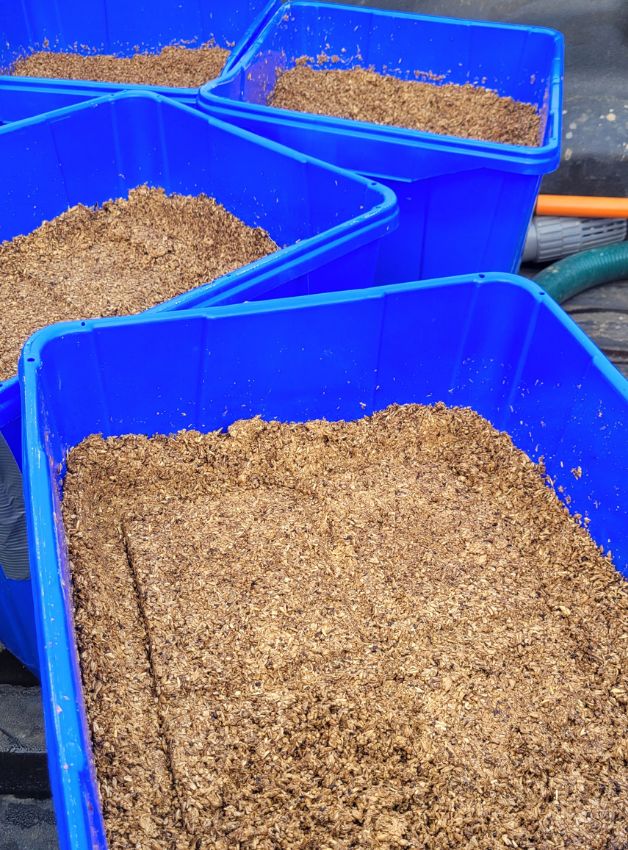
Spent grains are the leftover grains that breweries use for making beer. Normally it’s barley, and sometimes other grains. The spent grains themselves are not alcoholic, and are safe to give your pigs.
We obtain our spent grains from a few different local places who are more than happy to give them to us free of charge. Since they have to recycle them otherwise, it’s easier to give away what they can to farmers like us! We provide the bins, they fill them during brewing, and then let us know when we can pick up.
If your going to go this route I highly suggest small sturdy bins. Spent grains are HEAVY. Like, really heavy. So you either need smaller sized bins, or two people to load and unload the grains. We use small recycling bins and put our name on the sides.
Giving your pigs spent grains is a wonderful supplement to their feed! Filled with nutrients, fiber, and many other things, spent grains are beneficial to the health of your pigs.
Pasture
Pigs aren’t ruminant animals, but they can digest pasture grass efficiently. Raising pigs on pasture has proven to be successful for many farmers over the years. Including Joel Salatin, the famous farmer who teaches other people how they can succeed in small scale farming as well.
Make sure when you’re pasture raising pigs that they have a huge area, or else they will quickly turn your pasture land into a giant patch of dirt and rocks.
Cow patties (what the?)
Yes, you can feed your pigs cow manure. I’d say that you should only do this as a feed supplement/manure management program on your own farm if you have cows, and not to bring in manure from other farms. You know your cows, how the cow manure was handled, and how old it is. Let me explain the concept more..
You will read mixed reviews on this topic, but from a small scale farmer like myself, we definitely do this on our farm! Cows that live full time outdoors in large areas will poop all over the place, and that’s a good thing! They create amazing soil just by eating, walking, and pooping.
If the cows are on a rotation (or helping to create silvo pastures), they will leave behind a lot of manure that nature will have to decompose and turn into organic matter. One way you can speed up this process and spread the manure out faster, all while making your pigs incredibly happy, is letting the pigs root up and eat the leftover cow manure.
You might be thinking this sounds gross, and you don’t want to eat an animal who is eating manure in their diet. Well, the pigs aren’t eating the manure as their main source of feed, it’s more of a treat for them. What they are mostly doing is rooting around the manure to find undigested grains from the cows feed, or hay that’s stuck to it.
I do not recommend feeding cow manure as a meal to your pigs, rather, I encourage you to let your barnyard work in harmony with each other, tilling, rooting, pooping, and turning your soil into amazing organic matter!